
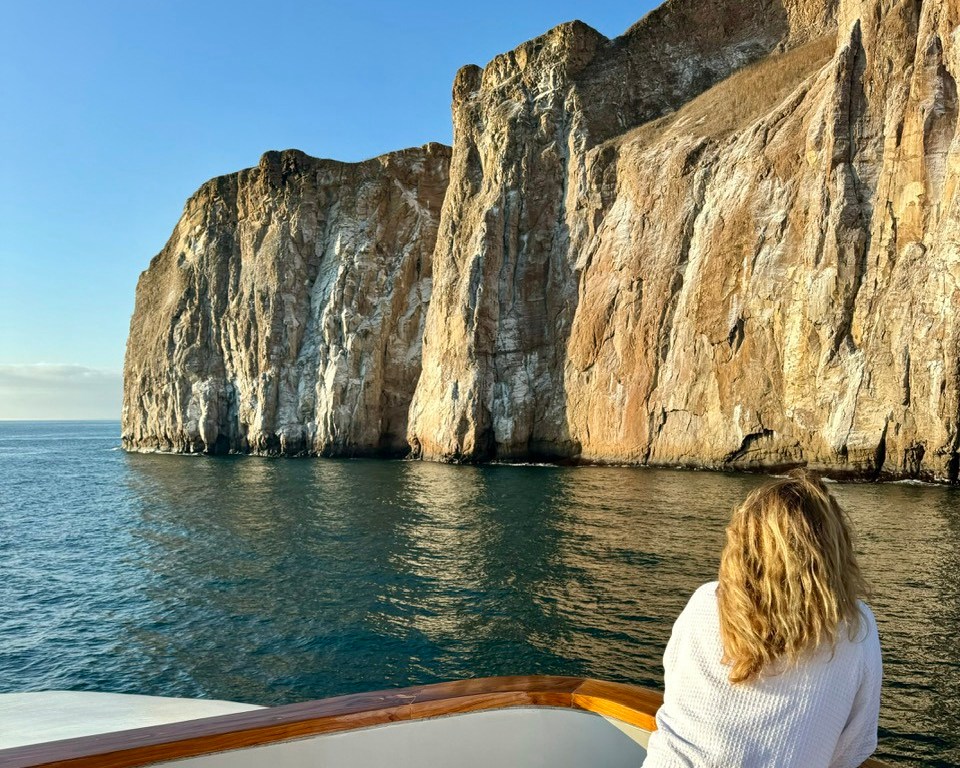
The article Taste of the Galapagos was first published in Taste and Travel Magazine (Jan. – March 2025) on Pages 48 – 53.
A black torpedo zoomed by my snorkel mask as my eyes widened to witness a Galapagos penguin, one of the smallest types of penguins in the world and the most surprising endemic resident of the islands. Just a few seconds earlier, I admired this adorable animal as it sat on the rocky shoreline. The penguin – with its white belly and black feathers – looked right at me and dove playfully into the ocean in my direction. Here, on volcanic Bartolome Island, we watched penguins groom themselves, lounge on the rocks, and perform their mating rituals.

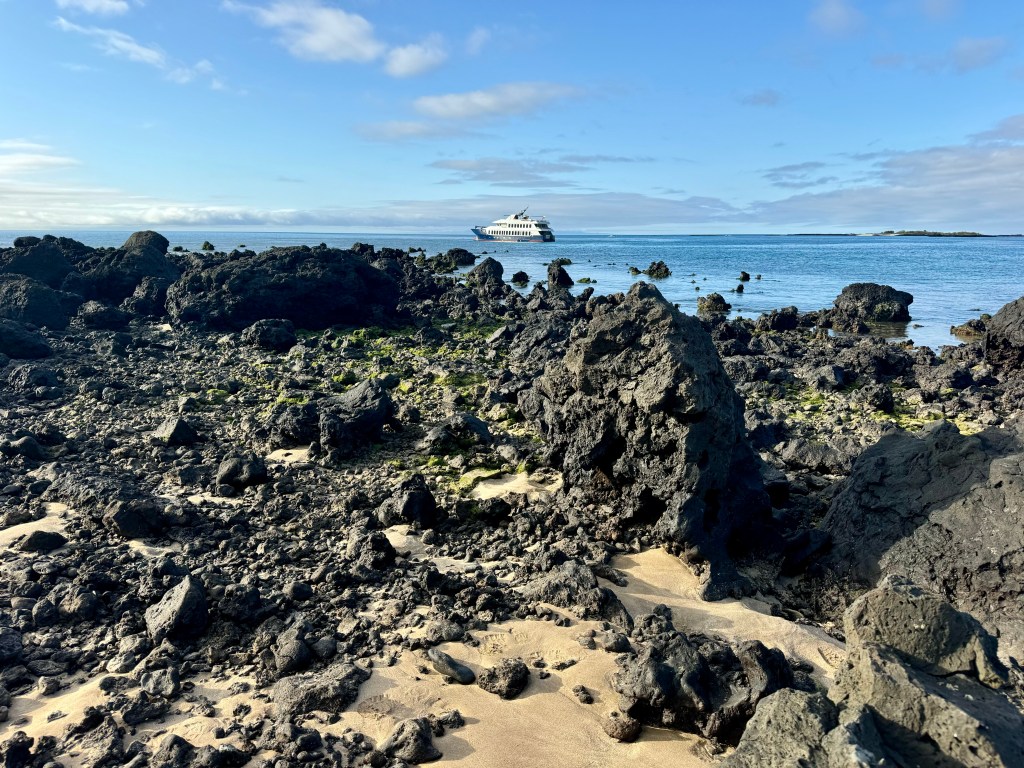
After this hourlong deep-water snorkel off one of the Galapagos Islands, six of us boarded a zodiac to return to our luxury expedition yacht, where the captain greeted us aboard. Hot chocolate with a dash of cinnamon was handed out as we peeled off our wetsuits. This post-adventure welcome drink was a simple pleasure that I brought straight to my room to savor in the hot shower with an ocean view. Here in Ecuador, rare Arriba cocoa beans are used to make high end chocolate. Ecuador is famous for its cacao and on our yacht – Ecoventura’s 142-ft, 10-cabin “Theory” – the daily hot chocolate ritual was a comforting treat. Single origin dark chocolate bars from various provinces were also available to sample onboard any time.

On previous islands, we snorkeled with schools of tropical fish, numerous sea turtles, sea lions of all sizes, a Galapagos shark, and a marble sting ray laying on the ocean floor with a tail bigger than my body. Vibrant-hued parrot fish in colors I’ve never seen before and puffer fish the size of my forearm dazzled in shades of banana yellow, teal, and black with white polka dots.

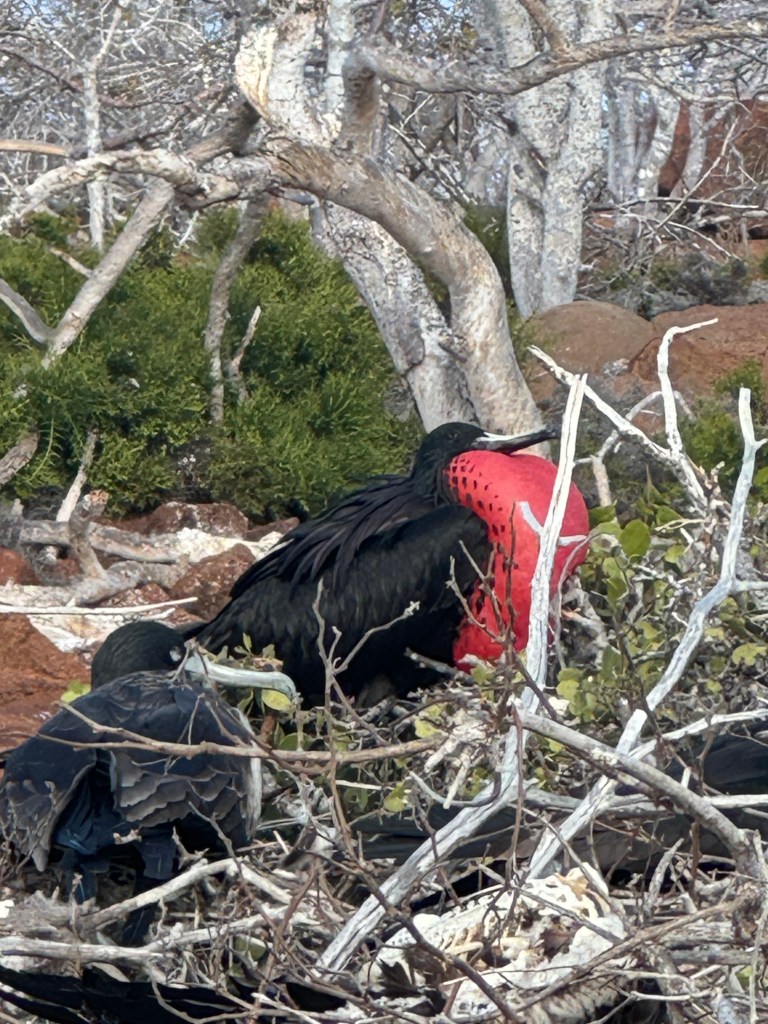
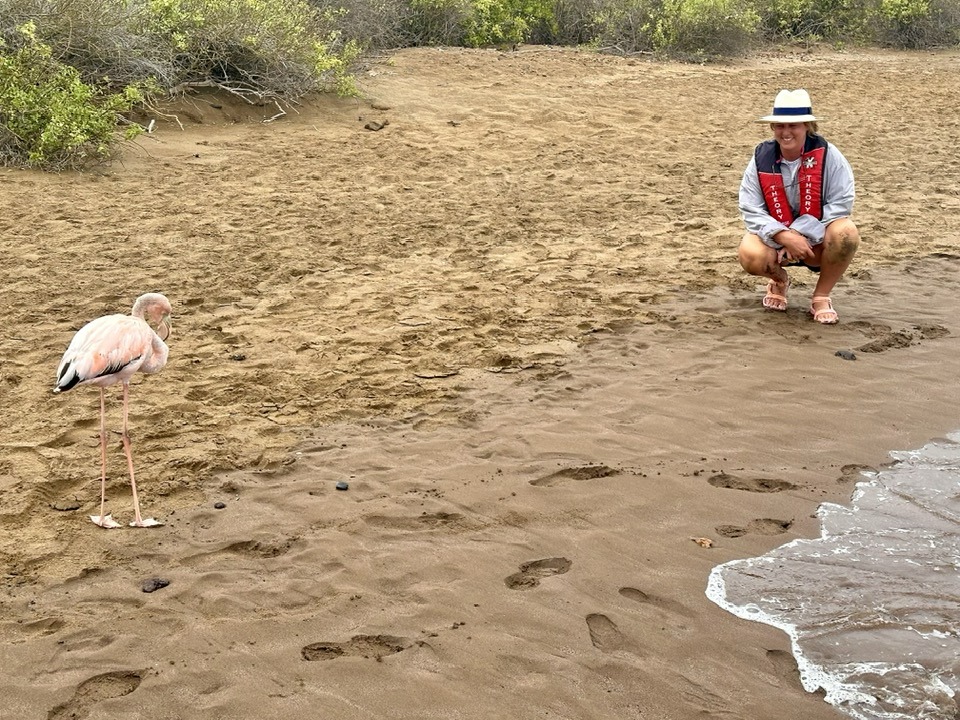
If this wasn’t enough animal adventure, earlier in the day we watched whales surface in the distance, a turtle make a beach landing, and seals play with a puffer fish like it was a ball. We observed pink and black flamingos standing majestically on an island lagoon as they preened themselves then witnessed two juvenile flamingos prance along the beach while prehistoric-looking marine iguanas sat still like rocks and blue footed boobies and frigates squawked around us. Each island presented many delights – albatross performing their mating rituals and launching themselves off cliffsides, red footed boobies nesting, blue footed boobies keeping an egg warm, and giant Galapagos land tortoises munching on guava fruit.
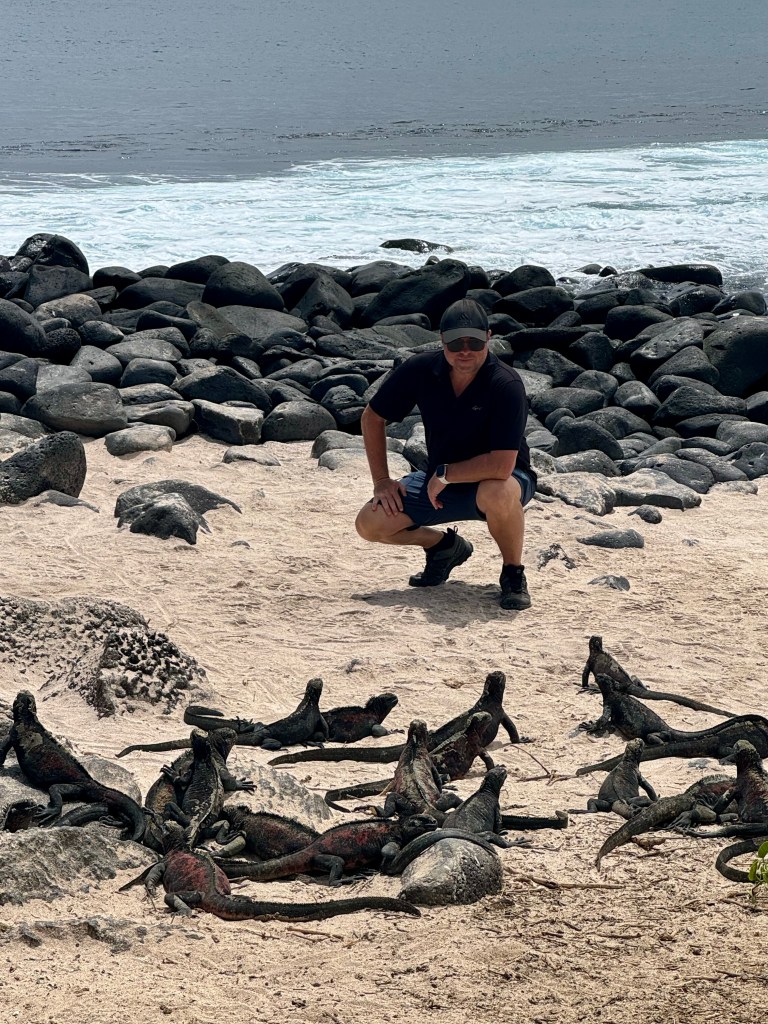
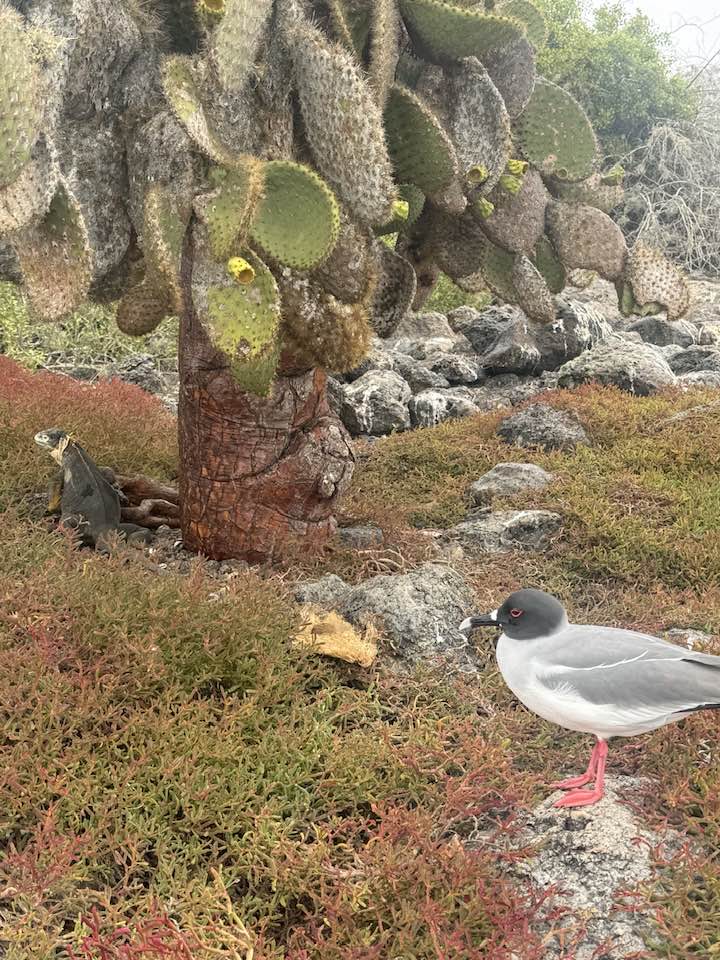
What surprised me the most was how fearless the animals acted like we were welcome among them, often coming closer with curiosity. Perhaps this was how it was at the beginning of time, with every day an extraordinary awakening and an understanding of life among animals with few predators. Every day felt like a scene out of Jungle Book.
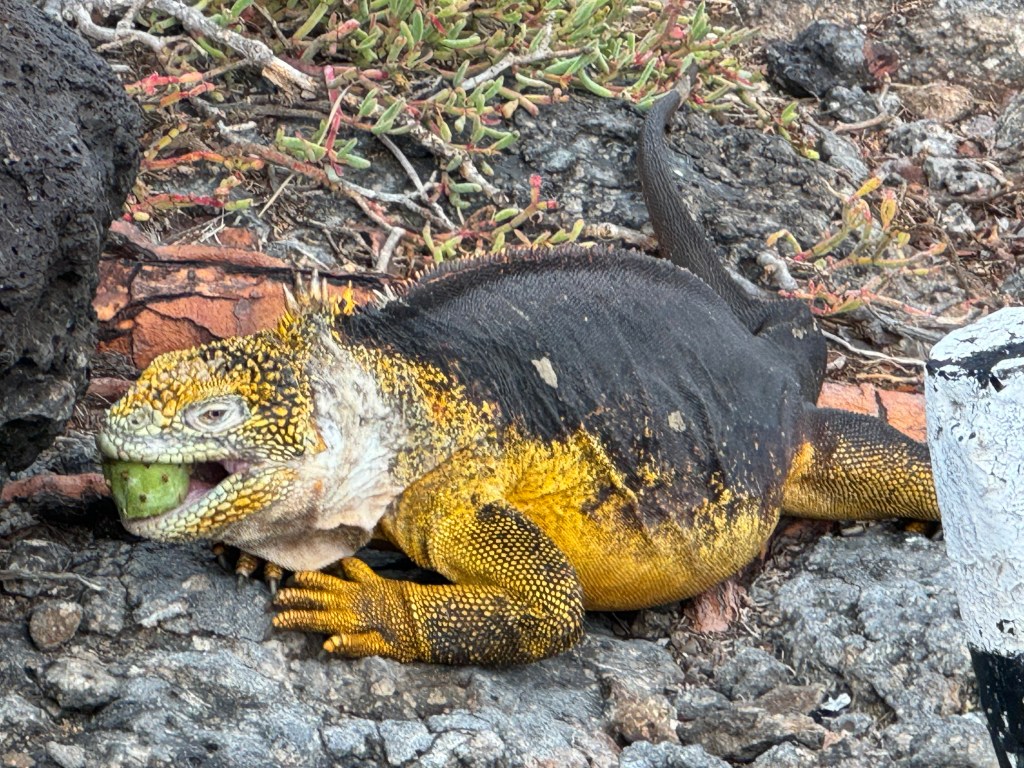
The Galapagos Islands – some 600 miles off the coast of Ecuador – is known for its unique biodiversity, approachable wildlife, and as inspiration for Darwin’s theory of evolution. It may not be where you expect to find culinary prowess, but our yacht’s compact galley presented local ingredients in elevated artful ways, better than some of the top restaurants in major U.S. cities.
Ecoventura is the only Relais & Chateaux sailing experience in the Galapagos Islands since 2018, when they received the prestigious invitation after a team lived onboard for a week and later secretly traveled undercover to witness the daily bounty of foodie delights. The association of unique hotels and restaurants promises grand cuisine and simple gestures of care and courtesy. More than half of the ingredients onboard come from the islands or mainland Ecuador. Supplies are restocked in the major port towns on San Cristobal and Santa Cruz Islands.
Moments of joy occurred regularly on this island odyssey. After a daily rooftop sunset with a clink of regional wine, Galapagos Summer IPA, or specialty cocktail, we settled in daily for a multicourse dinner. Chef Cristhian Murrieta – formally trained in Peru and recruited from one of the top restaurants in Guayaquil, Ecuador – presents five-star gastronomy experiences as nightly culinary journeys of Amuse Bouche, Appetizer, Soup, Main Course, and Dessert. Don’t expect to find endemic species on the menu but a healthy dose of local seafood, such as Galapagos prawns, lobster, octopus, and fish.

One of our favorite lunches was a rooftop BBQ with all of these seafood specialties, juicy meats, and fresh veggies prepared on the rooftop grill. Another evening, the chef showed us how to prepare local ceviche, while the bartender demonstrated how to craft an espresso martini with Galapagos coffee. And every afternoon, a bevy of appetizers and cocktails awaited us following our activities.

An impressive assortment of new menu items are presented for breakfast and lunch in a self-serve gourmet buffet, which typically involves a selection of salads, breads, and entrées. Dinner may include a French flair, or a nod toward Mexican cuisine, but always features local Ecuadorian dishes. We enjoyed trying entrées like “Encebollado” (fish stew), Prawn Bisque, Tournedos of Beef, Trout Carpaccio, Spinach and Confit Garlic Stuffed Ravioli, Ecuadorian Plantain Mash, Eggplant Parmesan with Blue Cheese Mousse, Mahi Mahi with Pistachio Crust, and Sea Bass in a seafood sauce with sauteed veggies. Decadent desserts wowed us too satisfying every sweet tooth: Chocolate Chip Banana Bread, Bananas foster, Mille-feuille, Apple Crumble, Crème Brule, Lemon Cheesecake, and more.
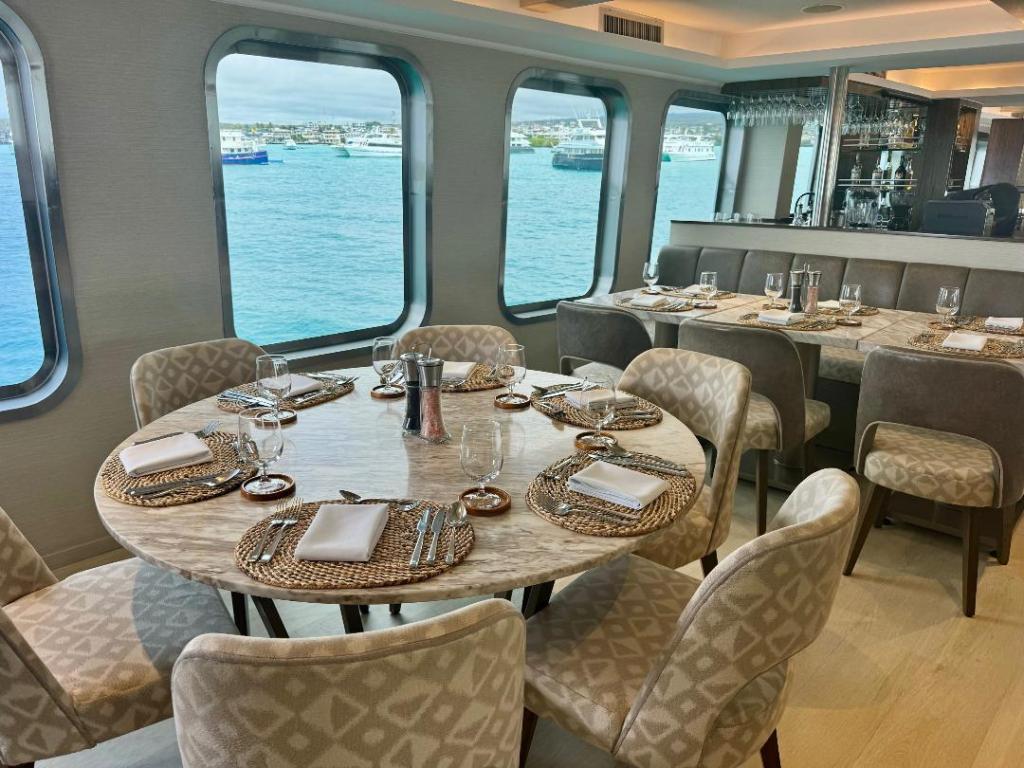
After seven days of wildlife adventures, our minds and hearts were forever altered by the unique local animals we encountered. We shared these experiences through the conversations and friendships made onboard, while savoring a wealth of outstanding cuisine.

Five Local Galapagos Dishes To Try
JipiJapa Ceviche
Learn how to make JipiJapa Ceviche, a recipe from Ecoventura’s Chef Cristhian Murrieta.
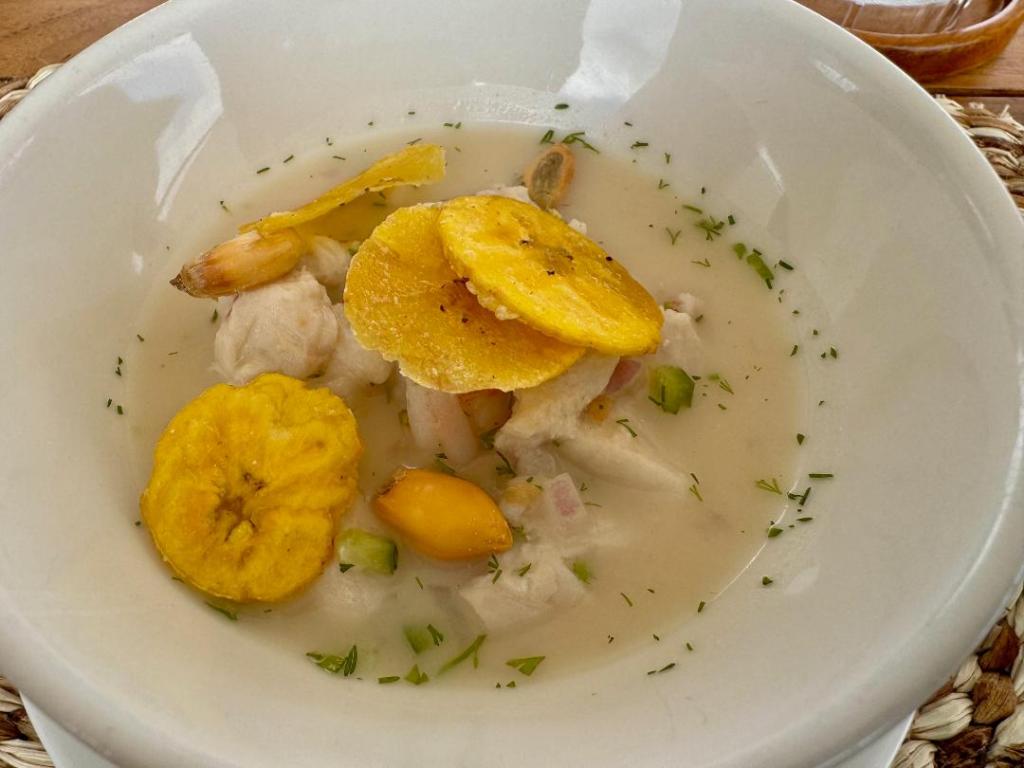
While you may have sampled mixed seafood ceviche before, this Ecuadorian variety pronounced “Hippy Hoppa” includes a paste made from local peanuts, an important crop in Ecuador, where more peanut varieties are found than any other place in the world.
Chef Cristhian shared that some of the best food can be found in the Manabi province of Ecuador, where peanuts are the main ingredient in around 70% of Manabi dishes – including ceviche (mixed seafood), viche (fish soup), tonga (checken stew) and corviche (deep-fried plantain balls).
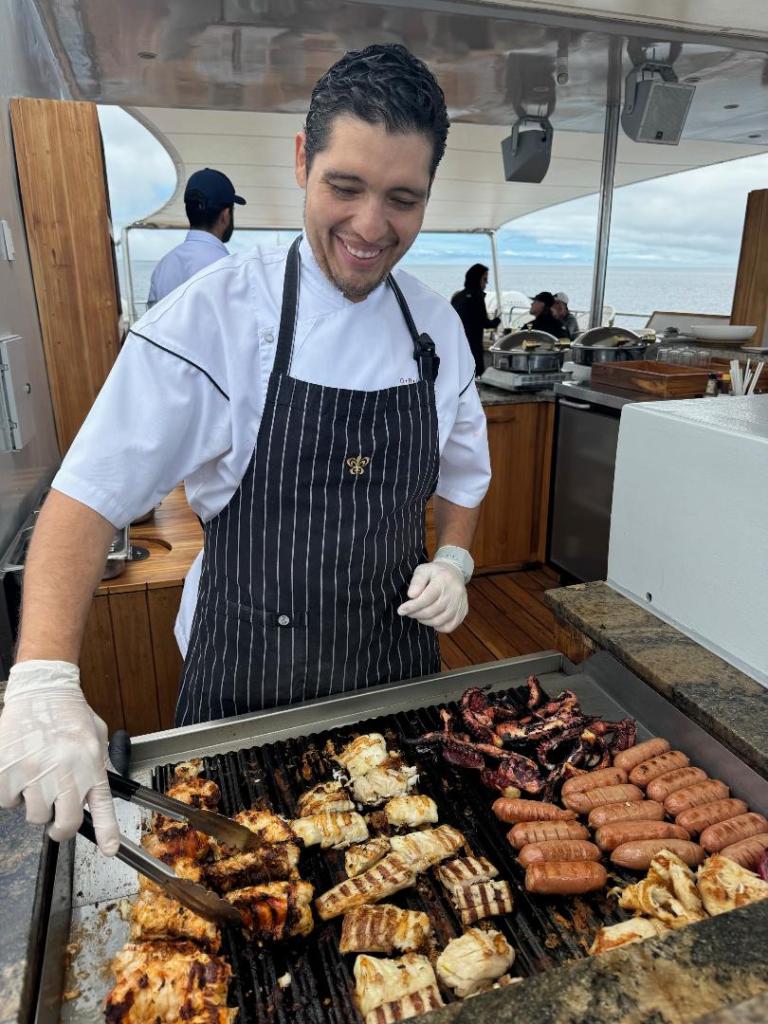
To make JipiJapa, first marinate chopped vegetables like tomatoes and red onions with lime juice for one hour, then add marinated sea bass or white fish with lime and salt and cilantro “to cook” the fish. Add some broth from fish and shrimp stock for more flavor (followed by the peanut paste). You’re treated to an Ecuadorian recipe that may feel more like a chilled soup that locals top with rice and plantain chips. Garnish with stacked shrimp and chopped cilantro.
Seco de Pollo
https://www.allrecipes.com/recipe/257313/ecuadorian-seco-de-pollo/
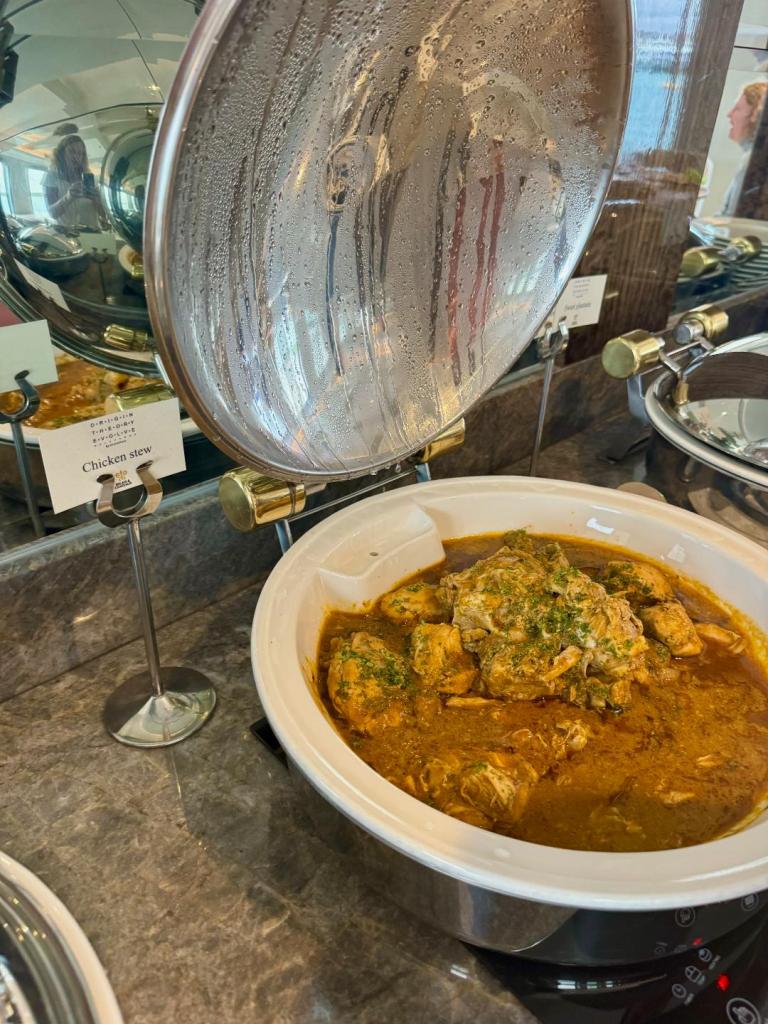
This Ecuadorian chicken stew is cooked slowly in a sauce of onions, garlic, peppers, tomatoes, herbs and spices. “The thick stock is often mixed with beer and Lulo,” said Chef Cristhian. Lulo (or naranjilla) is a popular fruit in Ecuador that looks somewhat like an orange tomato or kiwi, but tastes tart and tropical like a lime. We often saw Lulo served as a juice.
The chicken stew is served atop rice and often with a side of plantains.
Lobster with Garlic
Recipe: https://www.instagram.com/chefgenevieve/reel/CtPSpbwJ38W/

Presented as a “Galapagos Prawn” one night for dinner, this langoustine was what I might consider a petite, tender, sweet lobster poached in citrus butter.
In the Galapagos, there are many rules to follow for fishing this delicacy, the endemic Slipper Lobster that is in-season to catch from March to September. The more common native Spiny Lobster is nearly as delicious and can be fished from September to December, but none are available during the hottest months of January and February. Each year the specific dates are determined based on seasonal conditions and are publicly announced.
To prepare, you’ll need:
3 lobster tails
1 stick salted butter
3 cloves garlic, minced
1 tbsp minced parsley
3 lemons, halved
Neutral oil (canola or avocado oil)
Salt and pepper
Start by splitting the lobster tails: use scissors to cut down the center of the shell, making sure not to cut through the tail. Use a chef knife to cut down through the meat and the bottom shell (keeping the tail intact). Open the lobster tails and they will stand on their own. Season to taste with salt and pepper. While the meat soaks in the seasoning, combine the butter and minced garlic in a small pot and set aside. Optionally, double the butter and garlic amounts in a second pot for serving later as a dip.
Preheat the grill to medium high. Brush the tails with neutral oil, then place the lobster (meat side down) on the hottest part of the grill and the garlic butter pan on a cooler part. Cover and cook for 4 minutes. Stir fresh parsley into one pot of melted garlic butter. Flip the lobster tails over and move off the heat. Baste with the garlic butter sauce. Add sliced lemons (cut side down) to the hot part of the grill for 3 to 4 minutes.
Plate the lobster tails on a platter (meat side up), pour on the remaining garlic butter from the basting pot, and garnish with fresh parsley and grilled lemon. Divide the optional pot of melted garlic butter into three small cups and serve on the side.
Brujo Frito (Fried Scorpion Fish)

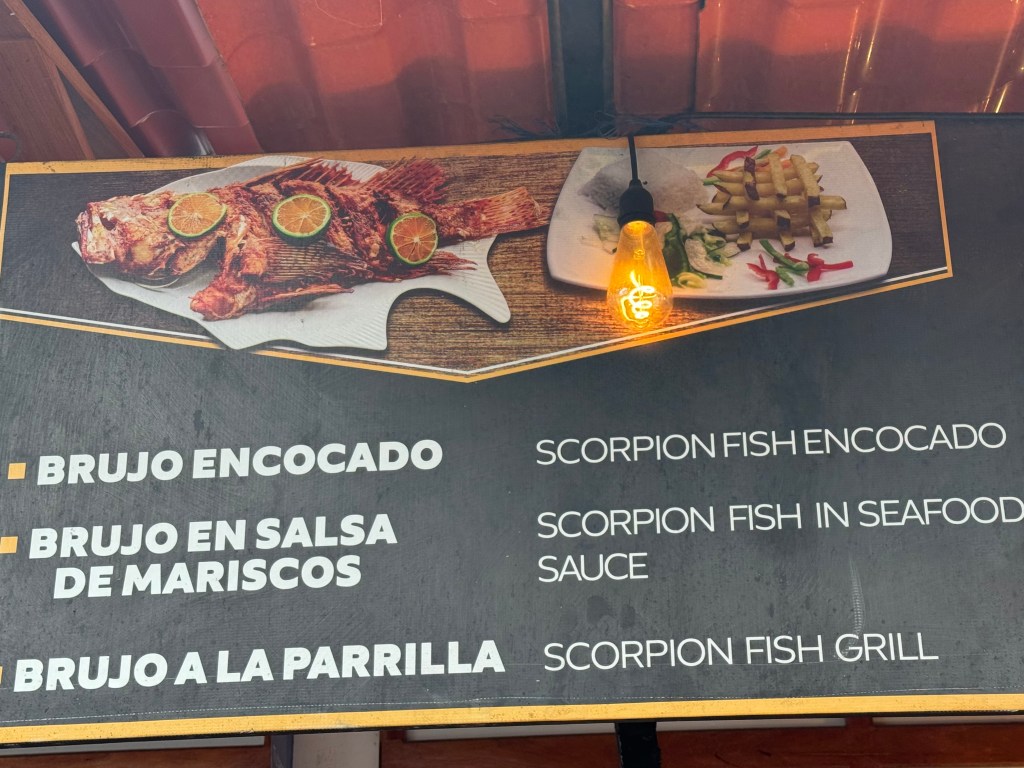
Strange-looking reddish-orange fish with bulging eyes and black dots are on display outside restaurants and in fisherman’s buckets on the streets of Galapagos port towns. Although scorpion fish have poisonous spines, it doesn’t affect their popularity or sweet taste. On our cruise, scorpion fish arrived as an Amuse Bouche spoonful with a tiny fried pickle and what looked like pepita seeds.

Brujo Frito is a popular local menu item served in town grilled or fried (with fries), or in seafood medleys with coconut sauce. Chef Cristhian recommends dining at Muyu in San Cristobal, part of the Golden Bay Hotel, to try green plantain sauce dipped with fried flying fins of the scorpion fish. Great for sunset, Muyu uses local produce and generous portions of Ecuadorian dishes like tuna, fried plantain balls, and scorpion fish with fried wings.
Encebollado, traditional fish soup
Recipe: https://www.laylita.com/recipes/encebollado-de-pescado-or-tuna-soup/
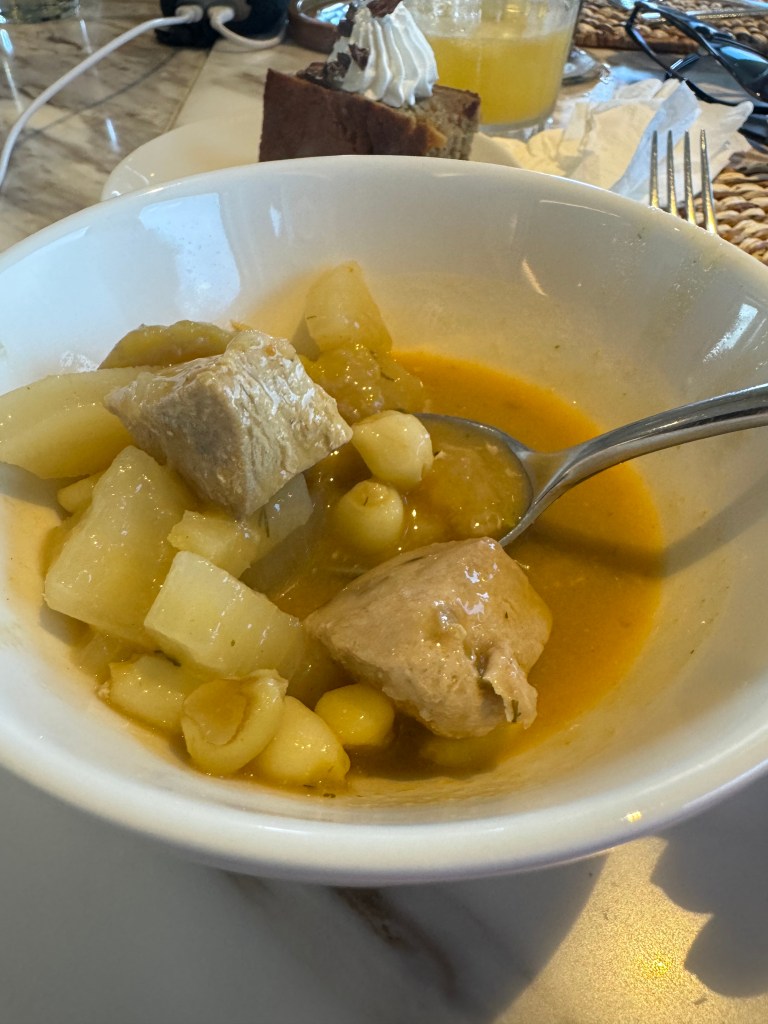
While we often saw Bolon de Verde (small fried plantain dumplings filled with cheese, herbs, and spices) presented in different ways, there are many traditional delicacies that feature local flavors. One must-try Ecuadorian dish is Encebollado, a thick fish-based soup served for breakfast, lunch or dinner. The soup typically features albacore tuna with boiled cassava, onions, tomatoes, peppers, and a garnish of lime juice, chilis, and cilantro. The hearty bowl is often accompanied with bread, plantains, or banana chips.







 lalascoop.com