
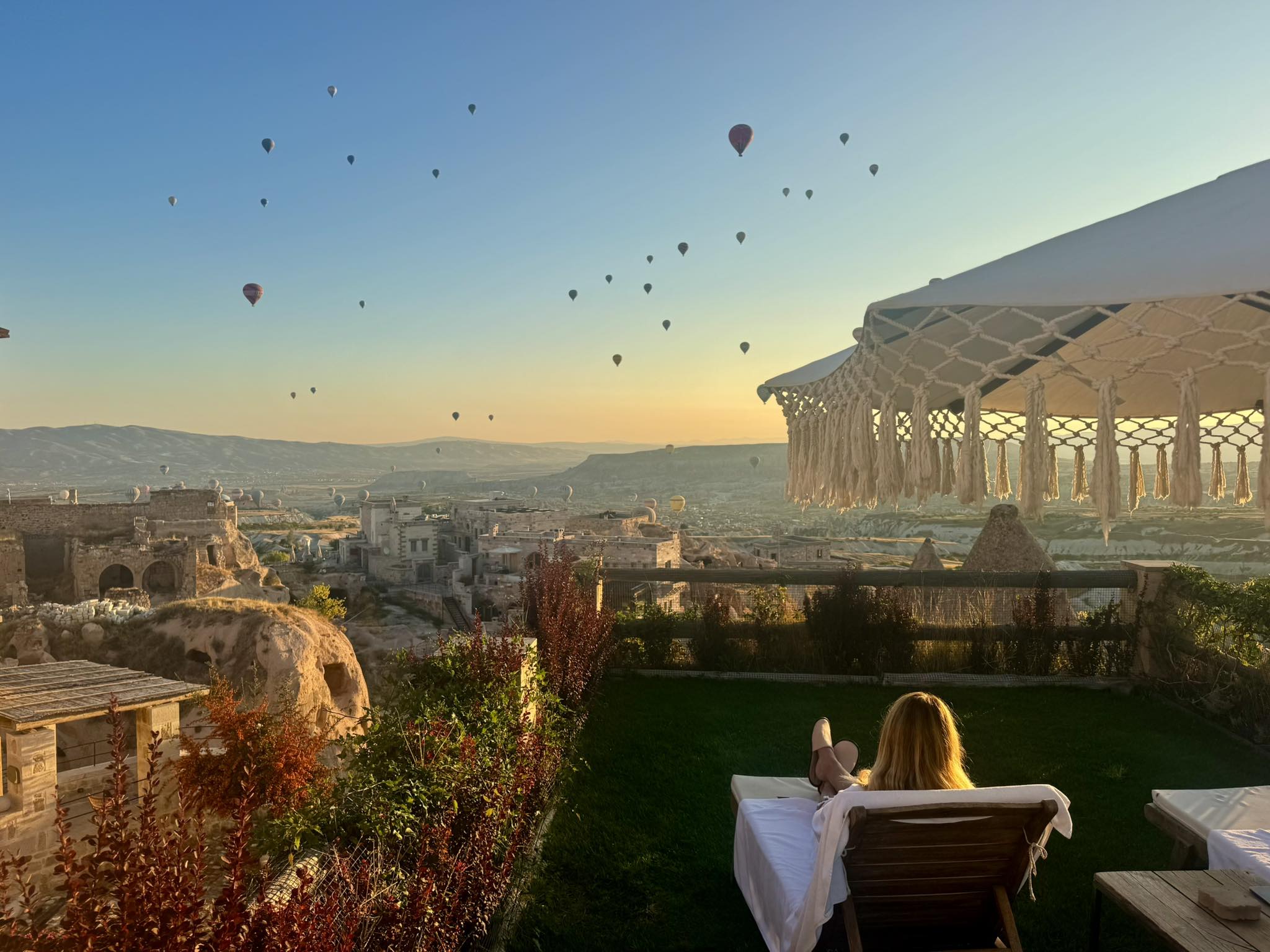
Like a dandelion puff, we floated above the Turkish fairytale landscape, famed for its otherworldly setting of fairy chimney rock formations, cave dwellings and ancient underground cities. As the fire burner gusts shot inside the mouth of the balloon to keep us afloat, my lungs breathed in and out in unison to this vital flame heating the air inside. By 5am, we observed numerous colorful balloons below and around us glowing and beating like a heart.

Ours was one of the first balloons to soar above the land as the sun awakened and blazed across the horizon. Our expert pilot steered us in and around the soft tuff rock formations, created by millions of years of volcanic activity and erosion, carved by ancient civilizations into homes, churches and vast subterranean complexes. We watched in awe of the changing early morning light above this otherworldly land of surreal pink and light tan pinnacles, cones, spires and hoodoos, as at least 50 more balloons ascended adding to the dreamy UNESCO World Heritage Site scenery.
Since the 1990s, I dreamt to be part of this famous valley, with pillar-like rock formations, just an hour flight from Istanbul, as I had learned about the cave-dwelling city from friends who visited on Semester at Sea in college. Once a major trade route between the ancient East & West, and home to a dozen different civilizations, the monasteries, churches, Byzantine frescoes, and rock-cut homes from the late 4th– 12th centuries have endured and many have been reimagined with modern conveniences.
Staying at Fairytale Argos in Cappadocia
The high-flying main attraction right from your hotel room
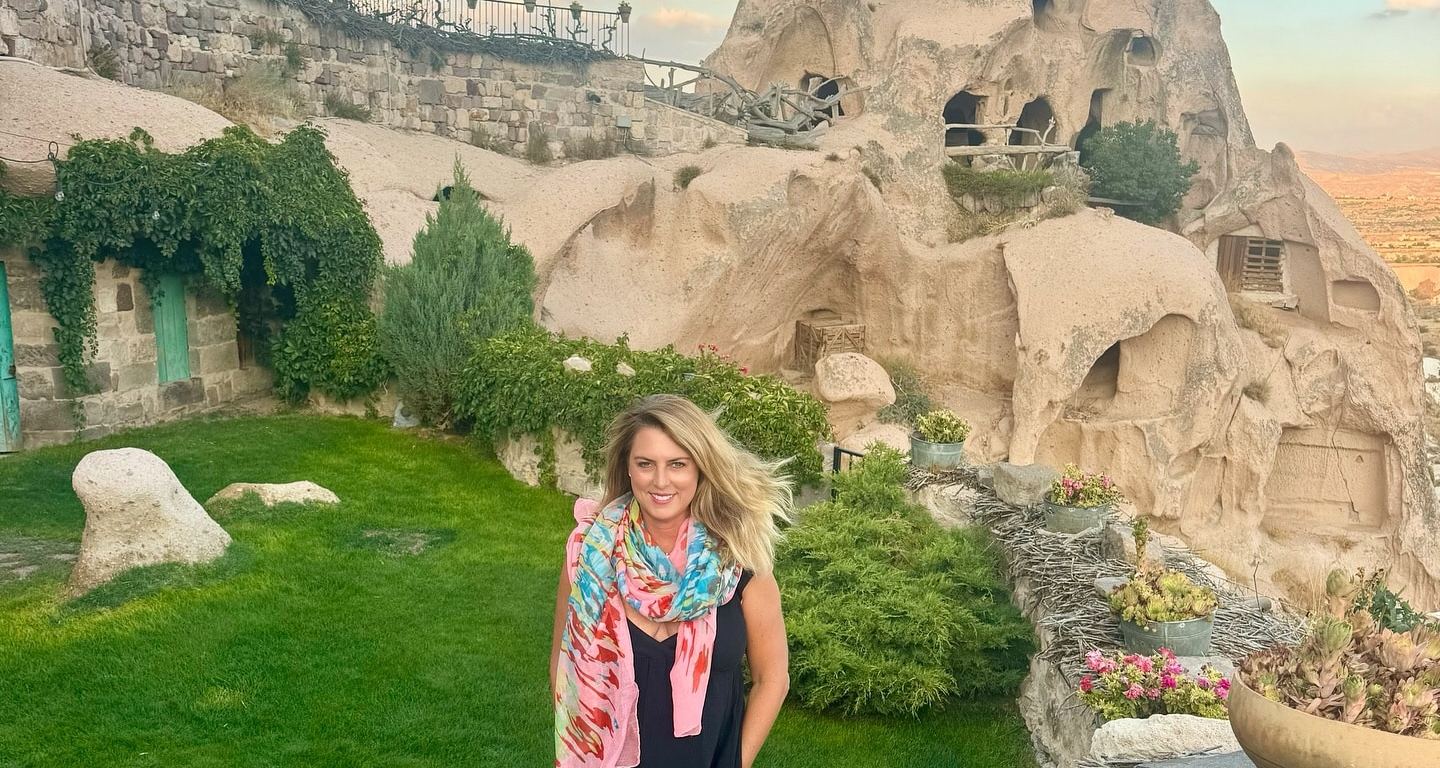
About an hour drive from the airport, we arrived at Argos, located on a windy cobblestone pathway, in a restored former monastery that felt like part of the village. Set amidst the lunar-like landscape, below the Uchisar Castle and overlooking the Pigeon Valley, our suite had direct views of the valley, and multi-level fairy chimneys right outside to explore. The ultimate experience of staying at Argos was being able to arise early, step outside, and watch the hot air balloons ascend, from our private grassy terrace lounge chairs. Here on our own perch, we sipped Turkish tea and gazed at hundreds of balloons soaring into the sky like chocolate chips dancing, with one or two making their way around us in the dreamy setting.
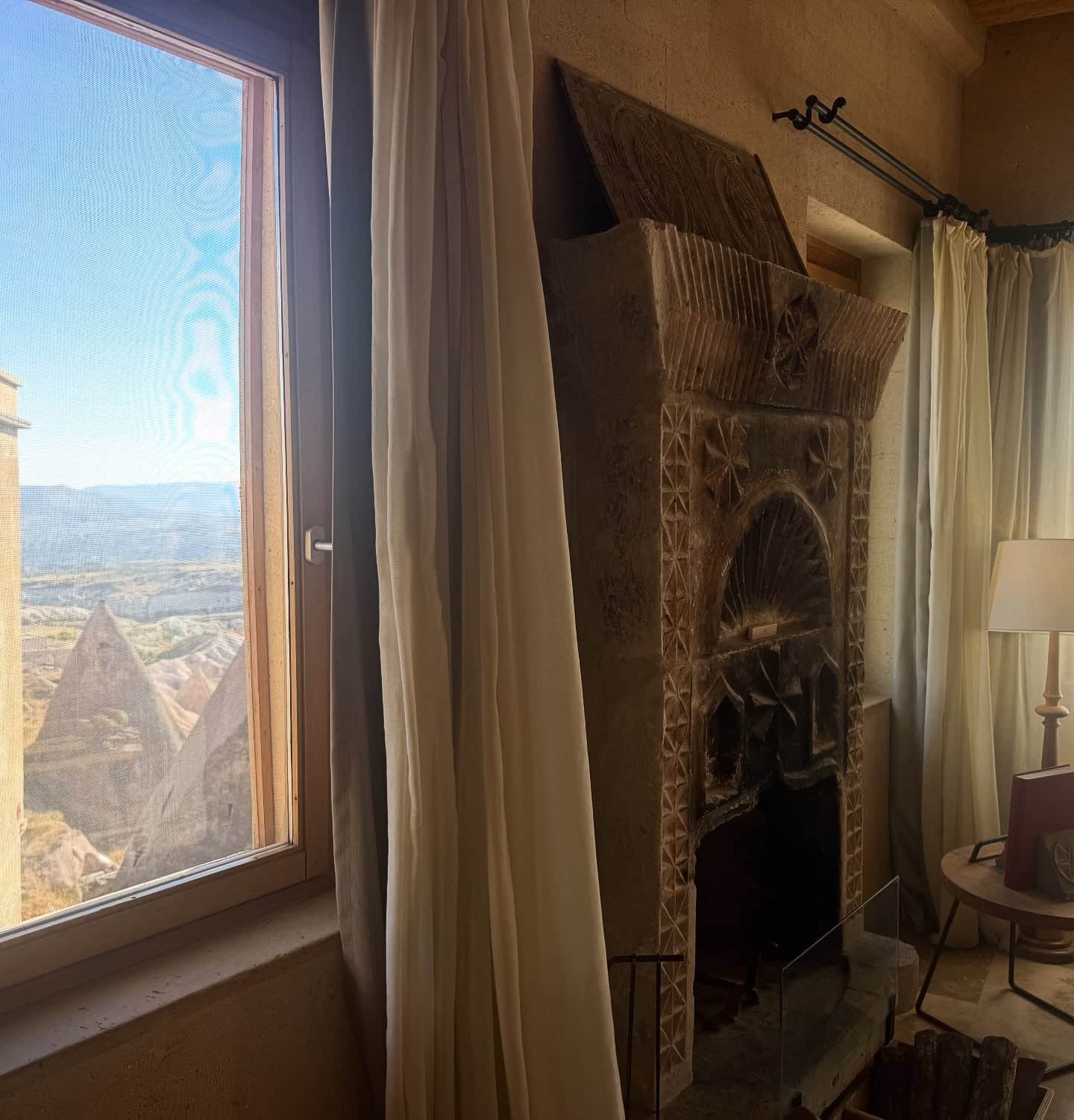
Our suite, with living room and ancient carved-wood burning stone fireplace (that could be lit upon request) was thoughtfully decorated with local pottery, wool rugs and a salvaged painted door used as art, adding to the overall feel of being in a distant land. Windows offered delicious views of the mystical landscape, even from the bathroom. Amenities included turndown service with treats, a Dyson hair dryer, and a thoughtful, sustainable, in-room recycling program, refillable glass water bottles, and QR codes to conserve paper.
Argos features 71 uniquely designed rooms and suites carved into the hillside – including nine ‘mansions’ and a spa, added in 2024, adapted from homes built by wealthy families beginning in the 18th century and abandoned some 100 years ago. A meticulous restoration and preservation project transformed this village-within-a-village, breathing new life into ancient remnants. The hotel’s new cave and 2-bedroom Splendid Suites include private indoor pools, Jacuzzis, or plunge pools within each suite’s mazelike layout. A 2,000-year-old monastery was discovered carved from stone, once a rest stop for camel caravans on the Silk Road. The property sits above terraced vineyards, gardens and valley views. Historical pigeon houses carved into the cliffs can still be observed, as their guano provided valuable fertilizer for vineyards and crops grown in the dry volcanic soil.

Experience Argos fairyland
Make the most of your time in and around Argos. Recover from traveling with a rest or soak in the heated pool, with a cocktail overlooking the entire valley, as the poolscape is an extension of the unique natural ancient landscape, hugged by a rock cliffside.
Read the full article on JohnnyJet.com and MSN published January 2026.
To discover the food scene in Istanbul and Cappadocia, read our Taste and Travel piece below entitled, “Feast of Two Continents” published spring 2026.

